Adding an EV Charger or Standby Generator at Home
Both jobs start the same way, with an honest look at what your electrical panel can handle.
October 7, 2026 · 4 min read
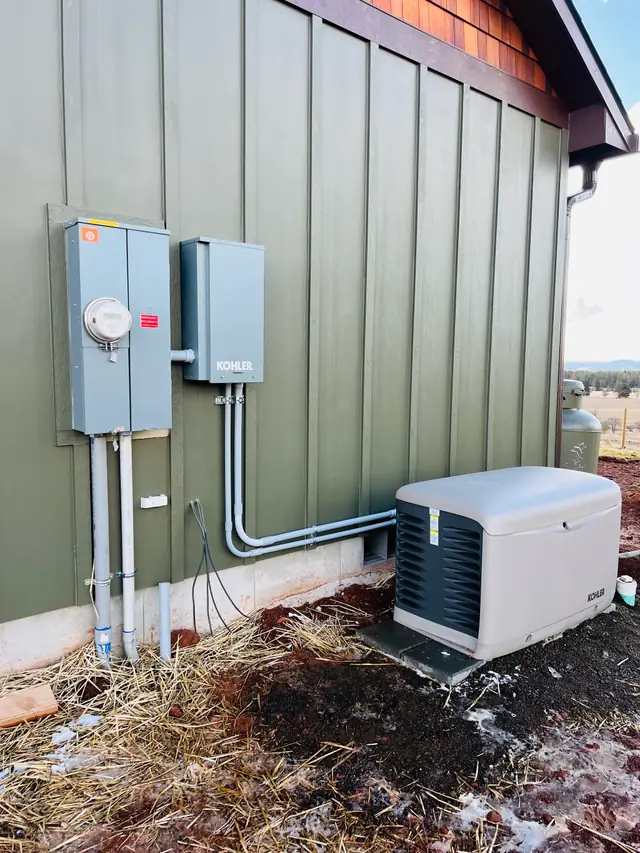
Two upgrades are showing up on more homeowners' wish lists around here: a charger for an electric car and a standby generator that keeps the house running when the power goes out. They look like different projects, but they share the same starting point. Both are big, continuous electrical loads, and both need your panel to be ready for them.
Here's what the work involves, so you know what to expect when you ask for a quote.
Step one is always the panel
Before anything gets bought, we look at the panel and the service. How big is the service? How much of it is already in use? Is there physical room for another breaker? A load calculation answers whether your home can add a charger or generator as it stands or whether something has to change first. Sometimes the answer is yes with no changes. Sometimes it means a panel upgrade, a sub-panel, or a load management device. It's much better to learn that before you buy the equipment than after it's sitting in the garage.
We won't guess at it over the phone, because every house is a little different, especially older ones. That's why the first visit is a look, not a sales pitch.
EV charger installs
A home EV charger needs its own dedicated circuit running from the panel to the spot where you'll park. The size of that circuit depends on the charger you choose and what your vehicle can accept, so check both before you buy. A faster charger isn't always the better choice if your panel has to be upgraded to support it, and many people find a modest charger fully covers overnight charging.
- Where the charger goes: inside the garage, on an exterior wall, or on a post. Short, direct runs from the panel keep the job simpler.
- How the wire gets there: through a finished garage wall or attic, or on the surface in conduit, which is common on stucco and block.
- Weather: an outdoor charger needs a properly rated enclosure and connections, and Yakima County sees real heat and real cold.
- Permit and inspection: ask who is taking care of it before work starts.
Jesus Arceo had us wire his house when he built it, and later called us back for a charger. His words: "Recently used them again to install a Tesla charger at our house and Saul did an amazing Job very happy with the work we received!" Having a homeowner come back for the second job is the best compliment we get.
Standby generator installs
A permanently installed standby generator is a different animal from a portable one. It sits outside on a pad, connects to a fuel supply, and starts on its own when the power drops. The electrical side centers on the transfer switch, which is the device that safely moves your house from the utility to the generator and back. That switch isn't optional. Without it, a generator can feed power backward onto the utility lines, which is dangerous for the line crews working to restore your power.
You'll decide whether the generator runs the whole house or only chosen circuits, like the furnace, fridge, well pump, and a few lights. A whole-house setup needs a bigger generator and a bigger transfer switch. A selected-circuits setup is cheaper to build and works well for most homes. If you're on a well, the pump is usually near the top of the list, because no power means no water. Mitch Hill's new build had a generator transfer switch wired along with his well pump, and we put it in during construction when it's easiest.
Placement and conduit
Where the equipment goes matters as much as what it is. A generator has to sit a safe distance from doors, windows, and vents, and it needs clearance around it for airflow and service. Local rules and the manufacturer's instructions both apply, and your electrician and gas or propane supplier should work out the location together. The conduit path from the generator to the transfer switch and the panel should be short and tidy, since long runs add cost and voltage loss.
For both jobs, think about where things are already. The best spot is often near the panel or meter, which keeps trenches and conduit short. On a rural lot, a longer run may mean trenching, and that's worth pricing before you settle on a location.
Before you call
- Know the make and model of the charger or generator you're considering, or ask us to help you choose before you buy.
- Take a photo of your panel with the door open, including the label inside.
- Think about where you want the equipment and how your property is laid out.
- Decide whether the generator should cover the whole house or only key circuits.
If you're thinking about either one, call JJ & S Electric at (509) 504-5504 or send a message through the contact page. We serve all of Yakima County, estimates are free, and we'll tell you honestly what your panel can handle.
JJ & S Electric LLC, (509) 504-5504
Call (509) 504-5504More articles
How to Tell if a Circuit Breaker Is Going Bad
A breaker that trips is usually doing its job, but sometimes the breaker itself is the problem, and the signs are easy to spot once you know them.
Tripping Circuit Breaker Troubleshooting: What to Check First
Breakers trip for a handful of reasons, and a few careful minutes of checking can tell you which one you're dealing with.