How to Tell if a Circuit Breaker Is Going Bad
A breaker that trips is usually doing its job, but sometimes the breaker itself is the problem, and the signs are easy to spot once you know them.
October 7, 2026 · 4 min read
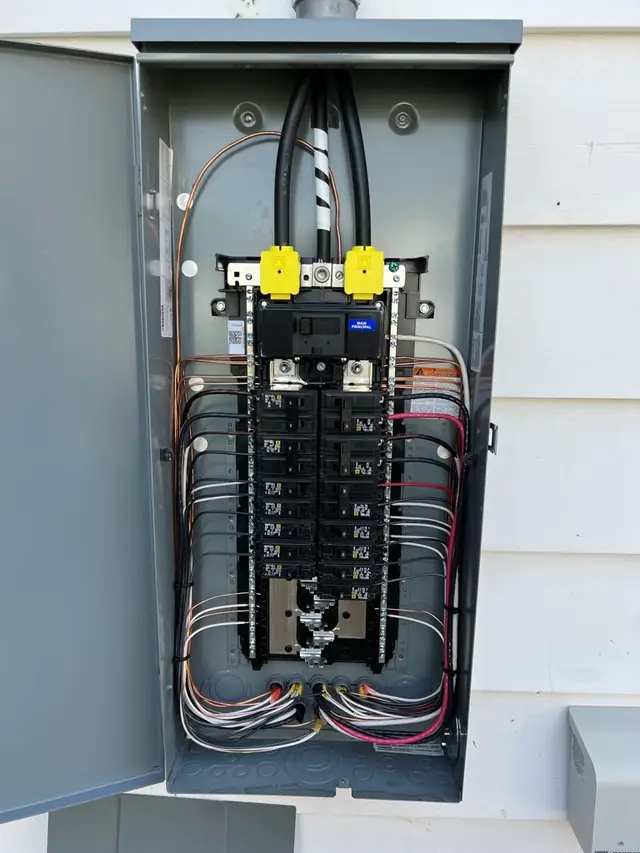
A circuit breaker has one job: cut the power when a circuit is asking for more than its wires can safely carry. Most of the time, a breaker that trips is doing exactly what it should. Now and then, though, the breaker itself is worn out, and telling the difference matters. A bad breaker can trip all day for no reason, or it can fail to trip when it should, and that second one is the dangerous one.
We get this call all over Yakima County, from older farmhouses around Moxee to newer homes out toward Gleed. Here's what we tell people on the phone and what we look for when we get to the panel.
Signs the breaker itself may be failing
- It trips over and over with nothing new plugged in. A breaker that carried the same load for years and now can't is often worn out.
- It won't stay reset. If the handle flops back to tripped right away, or feels loose and mushy instead of snapping firmly into place, something is wrong with the breaker or with the circuit it protects.
- It won't reset at all. The handle refuses to move to the on position, or it moves but nothing downstream gets power.
- It's hot to the touch. A breaker can run a little warm under a heavy, steady load, but a breaker that's noticeably hotter than its neighbors means heat is building at a connection or inside the breaker.
- You see burn marks, discoloration, or melted plastic on the breaker or around it in the panel.
- You smell something hot, like burnt plastic, near the panel, or you hear buzzing, crackling, or sizzling coming from it.
Any one of these is worth paying attention to. Two or three together means it's time to stop troubleshooting and get an electrician out.
Age matters more than people expect
A breaker is a mechanical device. It has springs, contacts, and a part that senses heat, and all of them wear. Every time the circuit heats up and cools down, the connections at the breaker expand and contract a little, and over many years they can loosen. A loose connection makes heat, and heat wears out the breaker faster. It's a slow cycle, and it's why an old panel can look fine and still have breakers that aren't doing their job.
If you don't know how old your panel is, look at the label on the inside of the panel door. It often lists the manufacturer and sometimes a date. Some older panel and breaker brands have known problems, and a licensed electrician can tell you whether yours is one of them. If the panel is old and you're seeing any of the signs above, that's a good moment to have it looked at, not a good moment to wait and see.
Is it the breaker, or the circuit?
A tripped breaker is a symptom. The cause might be an overloaded circuit, a short, a ground fault, or an appliance that's failing, and the breaker is just reporting it. Before blaming the breaker, try this: unplug or switch off everything on that circuit, reset the breaker, and see if it holds. If it holds, add things back one at a time. When it trips as soon as one particular device comes back on, that device is your problem.
If the breaker trips again with everything unplugged, the trouble is either in the wiring or in the breaker. That's the point where a homeowner has done all they usefully can, and finding out which one it is takes a tester and a trained eye.
What you can safely do yourself
- Look and listen. Check the panel for discoloration, a burnt smell, or noise without touching anything inside it.
- Open only the hinged outer door that shows the labels. Never take off the metal cover with the screws. That cover is there because the parts behind it stay live even with the main switched off.
- Switch off or unplug what's on the circuit, then reset with a dry hand, standing clear of the panel.
- Never tape, wedge, or hold a breaker in the on position, and never swap in a bigger breaker to stop the tripping. The wire is sized for the breaker. A bigger breaker takes away the protection and can let the wire overheat inside the wall.
When to stop and call
Call right away if you see burn marks or melted plastic, smell burning, hear sizzling or buzzing, feel heat at the panel, or find water anywhere near it. Call if a breaker won't reset after you've unloaded the circuit, or if it resets and trips again right away. Don't keep trying, since each reset into a fault puts more stress on the breaker and the wiring.
Replacing a breaker means working inside a live panel, which is exactly the kind of job that's safer with a licensed electrician and the right tools. And if it turns out the panel is the real issue, a panel upgrade is often the better fix than replacing one breaker at a time.
If your breaker is acting up and you're not sure what you're looking at, call JJ & S Electric at (509) 504-5504 or use the contact page. We're open Monday through Friday, 7 to 5, and we take emergency calls around the clock. Estimates are free.
JJ & S Electric LLC, (509) 504-5504
Call (509) 504-5504More articles
Tripping Circuit Breaker Troubleshooting: What to Check First
Breakers trip for a handful of reasons, and a few careful minutes of checking can tell you which one you're dealing with.
Why Licensing and Insurance Matter When You Hire an Electrician
A license and proper coverage are the difference between a contractor you can hold accountable and a bargain that ends up costing more.